

Slot and PPR (Prior Permission Required) are crucial concepts when you are planning a flight or managing air traffic and airport resources.

What are they?
Slot (Airport slot)
It's a permission assigned by a slot coordinator to an aircraft operator (commercial airline or private jet company) where an available "spot" is given to an aircraft to depart or land at a specific time and date. The objective is to manage capacity and congestion at the busiest airports.
Not all airports are slot-coordinated; only those where demand exceeds available capacity (commonly Level 3 per IATA). See the IATA list for details.
IATA Coordinated Airport List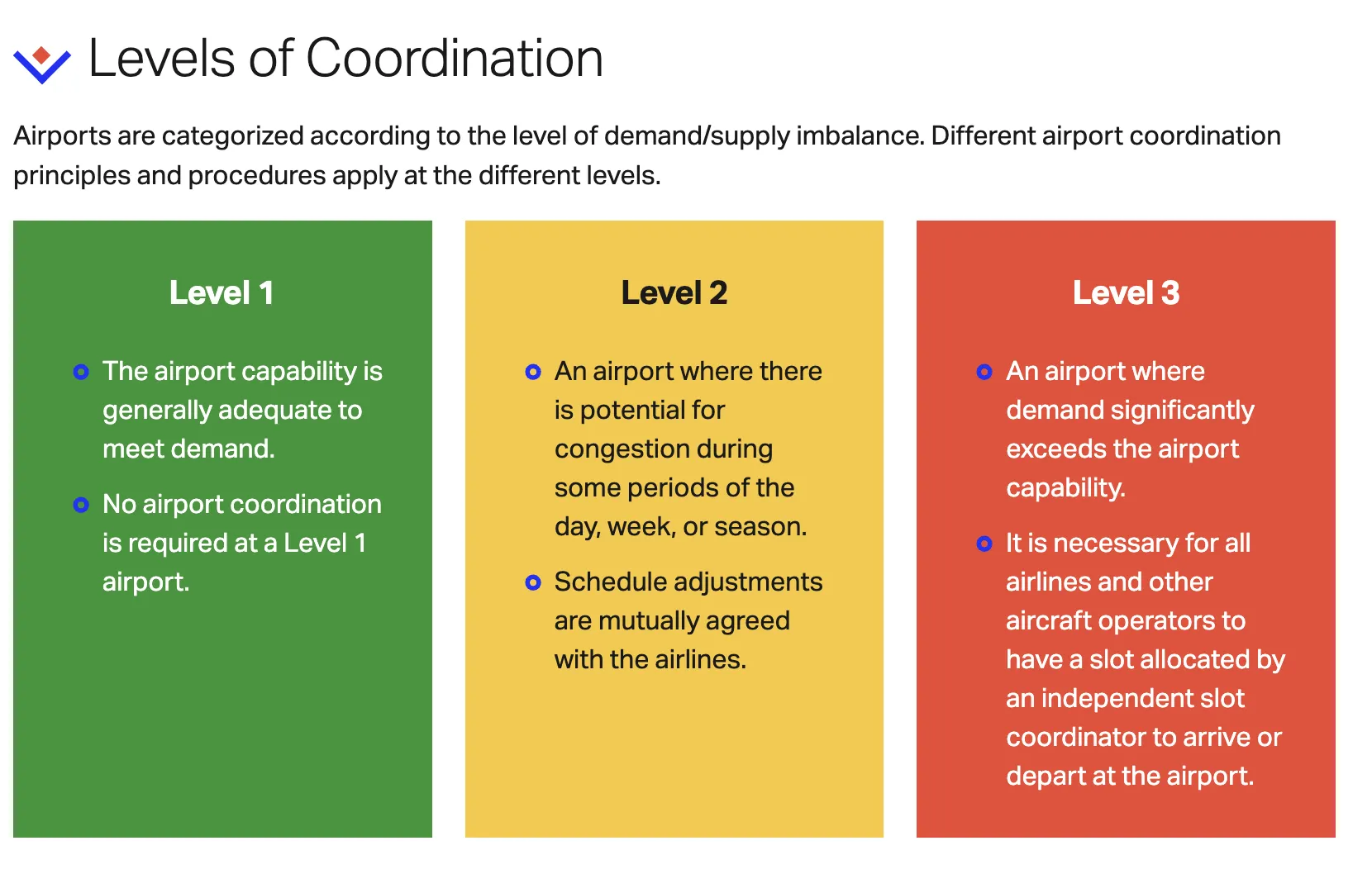
How are slots normally allocated?
By following the Worldwide Airport Slot Guidelines (WASG) — allocation uses seasonal windows and an 80/20 rule where 80% goes to airlines by historic precedence and 20% is available for other operators. In addition, there is a rule called "use it or lose it" where slots must be used at least 80% of the time.
PPR (Prior Permission Required)
PPR is required at airfields following and not limited by:
- Limited parking space.
- Specific security or operational requirements.
- Flights outside of normal operating hours.
- Specialized operations (training, cargo, events).
The PPR is issued by the Airport Operator, the designated Ground Handling Agent or FBO, or the local authority depending on the case, for example during the American Football Championship (SuperBowl) FBOs trend to issue PPRs depending on its ramp parking capacity.
The Achilles' Heel: Challenges and Solutions.
Managing slots and PPRs remains a pain point: limited availability, varying procedures, and operational constraints can force diversions or extra cost; for example even if you have a slot, you may not have a PPR for parking, and vice versa.
Airlines may be forced to operate "ghost flights" which are flights with few to zero passengers, with the main objective to not lose their slots, creating a financial and environmental constraint.
A slot is not a guarantee of a smooth operation. Delays due to weather, air traffic control (ATC) capacity, technical situations can cause an aircraft to miss its allocated slot window. At some airports, this can result in a significant delay or even a diversion to an alternative airfield, leading to a cascade of further issues.
Key Operational insights (Expert Tips).
During special events or seasons some airports normally categorized as Level 1 or 2 can become slot coordinated due to a special event, for example during the UEFA Champions, Formula 1 or other events the restriction can be increased, which normally will affect private-business operators, also it can include an increase of the operational cost, sometimes a single PPR can be around two thousand dollars.
How to obtain a feasible slot? At the beginning of every month, retrieve and create a calendar with the main events for the upcoming month (sports, fashion, arts, or others depending on your main customers) and work on early planning and advanced requests, that will allow you to submit PPR and slot requests well in advance, is important to consider each airport-specific lead times (often a minimum of 48 hours and maximum of 15 days, but sometimes if you have a good ground handler an exemption can be taken).
In cases as Tokyo (Haneda, RJTT) and others, submit your request before the monthly application cutoff. As the Japanese authority JCAB has a monthly cycle coordination and late requests most of the time are not accepted, or left pending and get the remaining available slots. For example to operate between June and July, application must be submitted before March 10th.
Use your preferred experienced local ground handler, to track, manage, and negotiate slots/PPR requests, especially for busy airports or events.
Adjust itinerary, have flexibility: We understand your main goal is to achieve the passengers legs departure or arrival time, but is important as well to consider alternative airports or staggered schedules to mitigate event-driven congestion or slot denials. Following the same example given above, for example instead of Haneda (RJTT) plan to operate to Narita (RJAA).
When the slot is not available, prebook the one offered and later on, you can seek for an improvement, meanwhile keep your customer aware of it.
Have a contingency plan meanwhile monitor regulatory updates: Stay informed on changes to ATC systems, slot re-implementation, or procedural changes that may affect required permissions. Plan alternative parking and positioning options in case of lack of slot or parking, especially where overnight parking is restricted.
Keep track of slots time frame (+/- minutes): For example airports such as RJAA, VHHH with those frames you can “play around” on last minute changes, RJAA has +/- 1 hour, and VHHH +/- 2 hours, so your slot can be confirmed for arrival at 1820Z, but you are free to arrive early or later following the time window. Depending on the airport most of the time you may be allowed to have a +/- 15 minutes window or more to land, which is great, Don’t you think?.
Collaborative coordination and transparency: Work closely with airport authorities, ground handlers, and ATC in case of no-shows or excessive delays, is better to request for a new slot than being fined and maybe later denied to operate to a specific airport.
Latest Trends and Developments.
The evolving tendency is driven by technological advancements, the traditional, manual process of requesting and confirming slots and PPRs via phone calls, faxes, or email is being replaced by more streamlined, automated systems. Platforms like “OCS” or "Smart PPR" and dedicated online portals are standardizing request formats and allowing for 24/7 access, significantly reducing administrative overhead and human error.
Market-Based Mechanisms: There is a growing debate about moving away from the traditional administrative allocation model towards a more market-based approach, where slot auctions and trading will allow airports to better monetize their limited capacity and ensure slots go to the airlines that can generate the most economic value, but at the same time it has started a demand to also incorporate what the experts call "demand-side fairness" metrics to better balance the interests of various airlines and stakeholders (Source: MDPI).
Sustainability and Environmental Considerations: The conversation around slots is increasingly tied to environmental goals. Some proposals suggest incorporating environmental factors, such as an airline's carbon footprint or the use of sustainable aviation fuels (SAF), into the slot allocation criteria. This could incentivize greener operations and align airport capacity management with broader climate objectives.
Conclusion
Slots manage capacity at congested airports; PPR manages ground infrastructure and parking permissions.
Reminder: implement proactive strategies to transform these challenges into opportunities.
Watch closely your ETD, ETA to match your slots and implement flexibility.